
Low Poly Bear 3D Model
A low poly bear must feel heavy before it feels detailed: broad shoulders, small ears, short tail and big paws carry the silhouette, while the rig has to support both quadruped walking and upright threat poses.
Matching downloadable assets
Start with these seed models, then generate variants in the same low-poly direction.
Members unlock protected STL access
Use the free OBJ to test the shape. Subscribe for protected STL downloads now; GLB, FBX, USDZ and Unity are shown as production export targets, not direct library downloads yet.
Nature Starter Pack
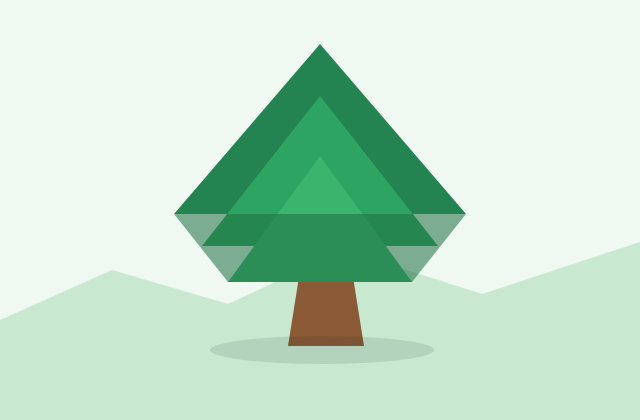
Low-Poly Pine Tree
A lightweight forest prop with a trunk, two faceted foliage layers and a clean base pivot for scattering.
View details- Triangles
- 24
- Texture
- Flat color
- License
- Commercial use
- Formats
- OBJ
Protected STL download
Production export targets
Cozy Animal Pack
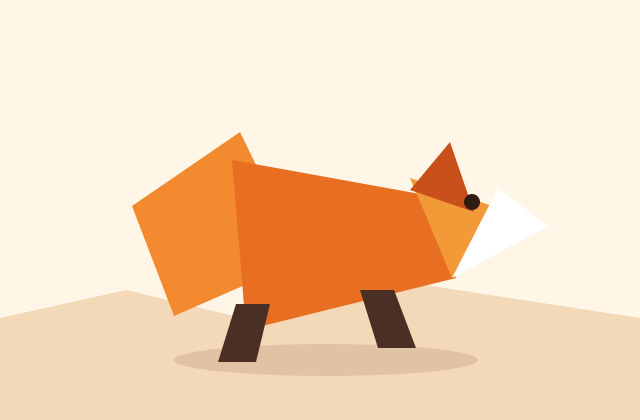
Low-Poly Fox
A stylized animal prop for cozy games, woodland scenes and AR previews.
View details- Triangles
- 24
- Texture
- Flat color
- License
- Commercial use
- Formats
- OBJ
Protected STL download
Production export targets
Vehicle Starter Pack
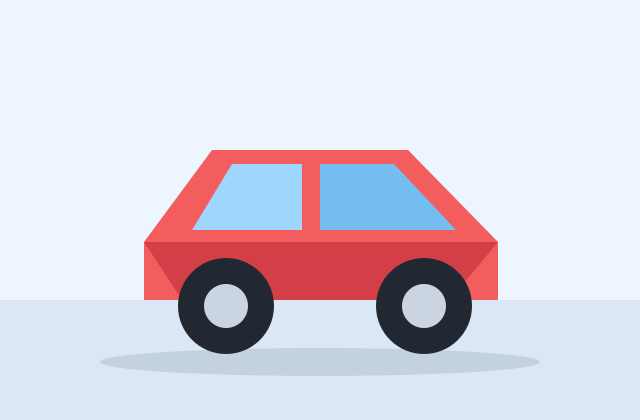
Low-Poly Arcade Car
A simple separated-wheel vehicle mesh for racing prototypes, traffic fillers and WebGL demos.
View details- Triangles
- 30
- Texture
- Material slots
- License
- Commercial use
- Formats
- OBJ
Protected STL download
Production export targets
Highlights
- Static forest bear: 800-1,800 triangles
- Animated game bear: 2,500-6,000; hero bear: 8,000-14,000 with LODs
- Bear hind legs are plantigrade, needing lower flatter foot roll than wolves or dogs
- Wide paw contact sells weight and prevents sliding
- Spine and pelvis should rock side to side during a lumbering walk
- Upright threat pose needs hips down and chest up without breaking shoulder loops
- Use large fur color regions, not hair cards, for the low poly look
- Seated or all-fours poses print more safely than rearing poses
A static forest bear or distant wildlife prop reads at 800 to 1,800 triangles. An animated game bear usually needs 2,500 to 6,000 triangles so the shoulders, hips, neck and paws deform without pinching during a lumbering walk. A hero boss bear or close AR animal can use 8,000 to 14,000 triangles with LODs, but spend extra budget on shoulder mass, head shape and paw claws rather than fur strands.
The rigging detail that separates a bear from a generic quadruped is weight shift. Bears have plantigrade feet, meaning the heel contacts the ground more like a human foot than a dog or wolf hock, so the hind-leg chain needs a lower, flatter foot roll and wider paw contact. Add a spine and pelvis setup that can rock side to side during the walk, plus a separate upright pose clip where the hips drop and the chest rises without breaking the shoulder loops.
For fur, use large flat color regions and silhouette clumps rather than hair cards. A grizzly, black bear and polar bear can share the same mesh and skeleton with different atlas colors, but keep muzzle, paws and ear interiors as distinct regions so the species reads at a distance. A single 1024px atlas is enough for most game bears; use 2048px only for a close educational AR specimen.
Export FBX for Unity and Unreal when you need walk, rear-up, swipe and roar clips, or GLB for Godot, Three.js and AR wildlife scenes. For 3D printing, seated or standing-on-all-fours poses are stable, while rearing poses need a broad base or rear support. Generated bear models are yours to use commercially with no attribution required, including RPG enemies, forest wildlife, educational AR and printed figurines.
Build the forest encounter
Frequently asked questions
How many triangles should a low poly bear have?
A static bear can use 800-1,800 triangles. An animated game bear usually needs 2,500-6,000, while a hero boss or close AR bear can use 8,000-14,000 with LODs.
How is a bear rig different from a wolf or dog rig?
Bears are plantigrade, so the heel contacts the ground more fully. The hind-leg chain needs a lower, flatter foot roll and wider paw contact than a digitigrade wolf or dog.
Can one bear mesh become multiple species?
Yes. Grizzly, black bear and polar bear variants can share one mesh and skeleton, with atlas color changes for coat, muzzle, paws and ears.
Is a rearing bear good for 3D printing?
Only with support. Seated or all-fours poses print more safely; a rearing bear needs a broad base or rear support to avoid snapping at the legs.
Can I use generated bear models commercially?
Yes. Generated bear models are yours to use commercially with no attribution required, including games, educational AR and printed figurines.
Related
Browse allNeed a custom low-poly model?
Generate one from a text prompt or reference image, then export GLB, FBX, OBJ or STL.
Open the generator