
Low Poly Sword and Weapon Prop Generator
Generate game-ready low poly swords and blades built as weapon props, with a clean grip pivot so they snap to a character hand socket and read sharp at a tiny triangle count.
Matching downloadable assets
Start with these seed models, then generate variants in the same low-poly direction.
Members unlock protected STL access
Use the free OBJ to test the shape. Subscribe for protected STL downloads now; GLB, FBX, USDZ and Unity are shown as production export targets, not direct library downloads yet.

Nature Starter Pack
Low-Poly Pine Tree
A lightweight forest prop with a trunk, two faceted foliage layers and a clean base pivot for scattering.
View details- Triangles
- 24
- Texture
- Flat color
- License
- Commercial use
- Formats
- OBJ
Protected STL download
Production export targets
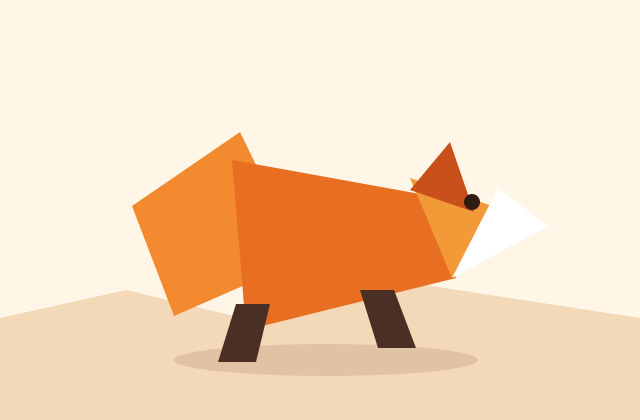
Cozy Animal Pack
Low-Poly Fox
A stylized animal prop for cozy games, woodland scenes and AR previews.
View details- Triangles
- 24
- Texture
- Flat color
- License
- Commercial use
- Formats
- OBJ
Protected STL download
Production export targets
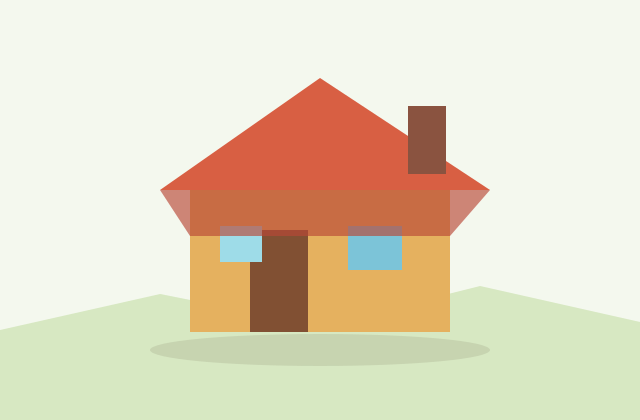
Village Starter Pack
Low-Poly Cottage House
A compact village building for cozy sims, isometric towns and stylized environment blocking.
View details- Triangles
- 18
- Texture
- Flat color
- License
- Commercial use
- Formats
- OBJ
Protected STL download
Production export targets
Highlights
- Built as a weapon prop with a deliberate pivot at the grip for natural swinging
- Attaches to a character hand socket or bone in Unity and Unreal
- Very low budget of 200-1,500 triangles so a whole armory stays cheap
- Faceted blade bevels and ornate crossguards read sharp without dense geometry
- Trim-sheet atlas at 512-1024px lets many weapons share one material
- Emissive runes and glowing edges for enchanted blades at zero extra draw cost
- FBX preserves pivot and slots for socket attachment; GLB for web and AR
- STL or 3MF for printing a display replica of the blade
A sword is a weapon prop, and props live by different rules than characters. The whole job of a blade is to look great in a fist and swing convincingly, so our generator builds swords as a single coherent mesh with a deliberate pivot at the grip. That pivot is the most important detail: place it at the point where the hand wraps the hilt and the weapon will rotate naturally when the character swings, sheathes, or holds a ready stance. Get the pivot right and attachment becomes trivial.
These models are intentionally extremely light. A typical low poly sword lands between 200 and 1,500 triangles, because a weapon held in a hand or seen across an arena does not need dense geometry to read as sharp and dangerous. Faceted bevels along the blade catch light and define the edge, an ornate crossguard adds character, and a wrapped grip sells the silhouette, all without inflating the count. That economy means you can hand every enemy in a horde a unique blade and never feel it in the frame rate.
Attachment is the heart of a weapon workflow. The standard approach is to attach the sword to a socket or bone on the character skeleton, usually the right hand. In Unity and Unreal you parent the weapon to a hand socket and let the animation drive it; the sword inherits the hand motion automatically. This is exactly why FBX is the recommended export for swords going into those engines, because it preserves the pivot, the material slots, and the hierarchy needed for clean socket attachment. The blade then follows every attack animation without any extra rigging on the weapon itself.
Texturing a weapon is a great showcase for trim sheets and atlases. Rather than unwrapping a unique texture for every sword, the blade, guard, and grip sample from a shared trim-sheet atlas, typically 512 to 1024 pixels, where strips of metal, leather, and ornamentation are laid out for reuse. This keeps draw calls low and lets a whole armory of weapons share one material. Flat color and baked gradients carry the stylized look, and a single atlas means your weapon rack barely touches texture memory.
Enchanted blades are where the fun begins. The generator can run glowing runes down a fluted blade or light the cutting edge with an emissive map, so a magic sword reads as self-lit even in shadow. Because the glow lives on the emissive channel of the same shared atlas, you get a dramatic enchanted effect at zero extra draw-call cost. For formats, use FBX for Unity and Unreal socket workflows, GLB for web, Three.js, Godot, and AR, and OBJ for static exchange. If you want a display replica you can STL or 3MF the blade for 3D printing. Every weapon you generate is yours commercially with no attribution required.
In practice: generate the sword, verify the pivot sits at the grip, accept or recolor the trim-sheet atlas, and toggle the emissive runes if you want an enchanted variant. Export FBX, attach it to your character hand socket, and let the existing attack animations move it. Swap accent colors and rune patterns to build a full loot table of common, rare, and legendary blades from one base, keeping each variant under budget and visually distinct.
Equip a hero with this weapon
Frequently asked questions
How does the sword attach to my character?
The sword has a pivot at the grip so you can parent it to a hand socket or bone on your character skeleton. In Unity and Unreal the weapon then follows the hand through every attack animation automatically.
How many triangles is a low poly sword?
Usually 200 to 1,500 triangles. A weapon held in a hand or seen across an arena reads as sharp with faceted bevels and a defined edge, so it does not need dense geometry.
What is a trim sheet and why use one?
A trim sheet is a shared atlas with reusable strips of metal, leather, and ornament. The blade, guard, and grip sample from it, so an entire armory of weapons can share one 512-1024px material and keep draw calls low.
How do enchanted glowing blades work?
Glowing runes and edges are driven by the emissive channel of the same shared atlas, so a magic sword appears self-lit even in shadow with no extra draw-call cost.
Can I use these weapons in a commercial game?
Yes. AI-generated weapon props are owned by you and are free to use commercially with no attribution required, including in shipped games and asset packs.
Related
Browse allNeed a custom low-poly model?
Generate one from a text prompt or reference image, then export GLB, FBX, OBJ or STL.
Open the generator